PLASTICS TECHNOLOGY · INSERT MOLDING · LSR INJECTION MOLDING
Plastic Injection Molding for Connectors and Wiring Systems
Horizontal and vertical injection molding machines with clamping forces ranging from 40 to 500 metric tons. Processing of engineering thermoplastics and high-performance plastics, LSR injection molding, and the reliable overmolding of inserts and pre-assembled cables.
Plastic as a functional component of the joint
In an overmolded connector, the plastic serves a purpose far beyond that of a mere housing. The material, component geometry, and process control all influence the electrical insulation, sealing, strain relief, dimensional accuracy, and service life of the entire connection.
KE Elektronik integrates wire processing and plastic injection molding into a single, end-to-end manufacturing chain. This allows wires, contacts, inserts, overmolding, and testing procedures to be specifically coordinated with one another. Interfaces are minimized, and KE Elektronik retains responsibility from the insert all the way through to the ready-to-install connection solution.
Insert Molding and Cable Overmolding
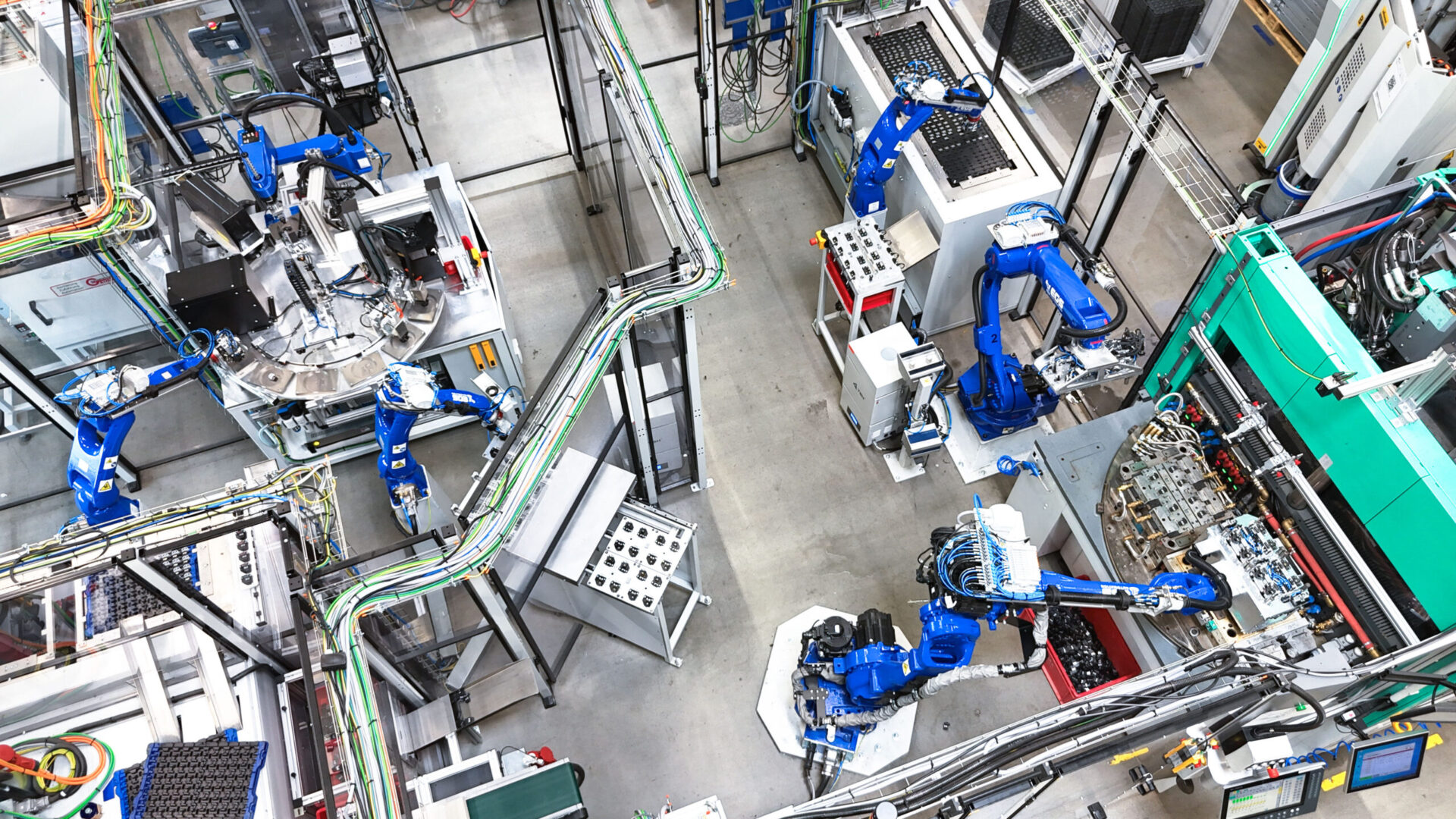
In the overmolding of inserts, stamped grids, contacts, and pre-assembled cables are placed directly into the injection mold and overmolded with the application-specific plastic.
Depending on the product, overmolding serves several functions:
- electrical insulation,
- mechanical protection,
- Securing and positioning the inserts,
- Strain relief,
- Media and longitudinal watertightness.
Design and validation are performed in accordance with the respective customer, product, and environmental requirements.
Automated Plastic Injection Molding for Consistent Production Quality
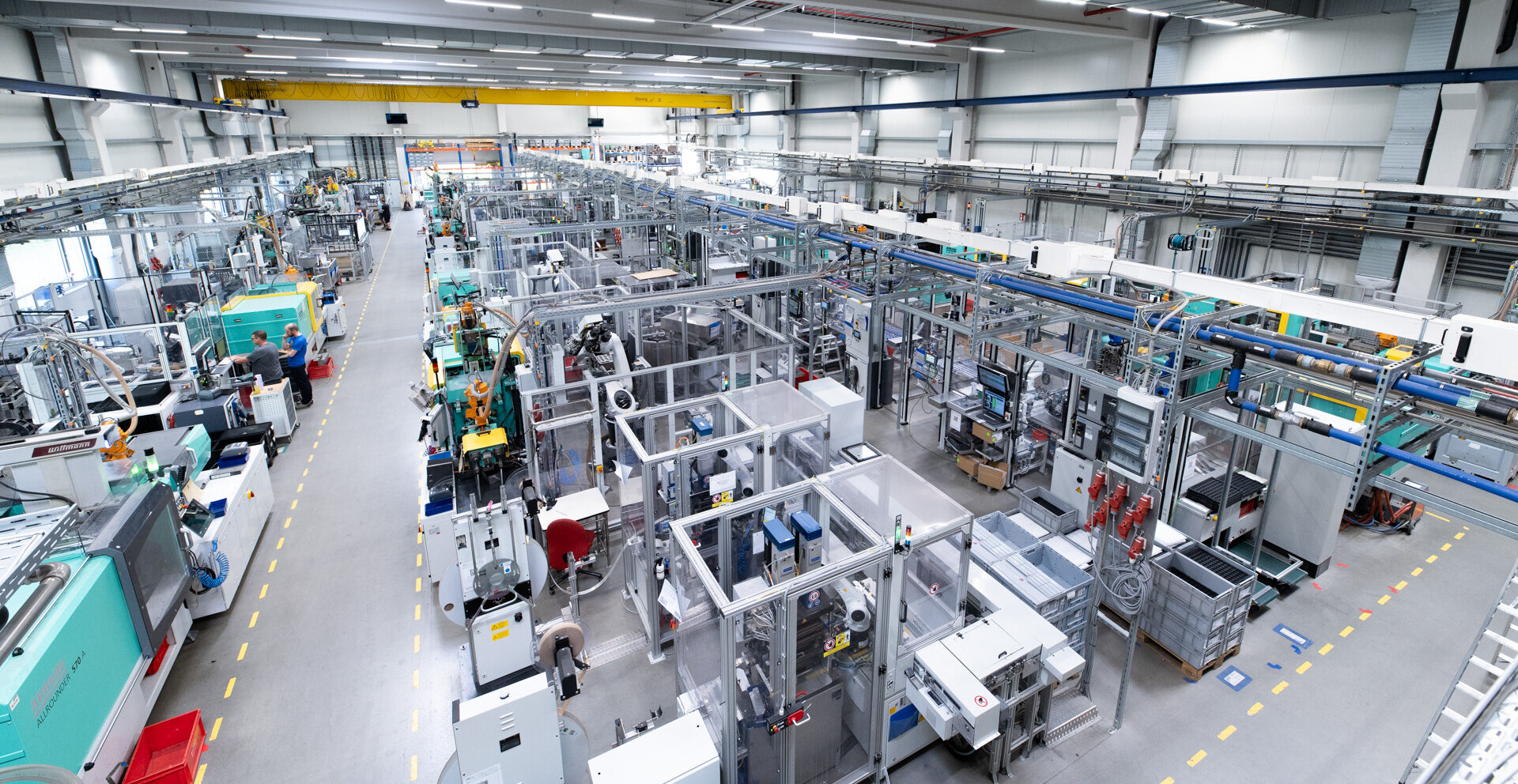
The machine fleet includes horizontal and vertical injection molding machines with clamping forces ranging from 40 to 500 metric tons. Depending on the product, loading, part removal, and further processing are performed using automated handling systems or multi-axis robotic systems.
Production takes place worldwide on ARBURG injection molding machines in accordance with uniform manufacturing standards. Process parameters relevant to the components are monitored during production. For particularly demanding applications, the machine-based process monitoring is supplemented by mold-mounted sensors.
The relevant machine, tool, and process data are stored on a component-by-component basis and documented in a traceable manner. This allows process deviations to be detected early, affected components to be clearly identified, and production quality to be ensured over the long term.


LSR Injection Molding for Connector Seals
For elastic sealing applications, KE Elektronik processes two-component liquid silicone rubber, or LSR for short.
Depending on the product, the LSR is either injection-molded directly onto the component or used to manufacture separate connector seals. This also includes sealing elements with complex rib geometries. The geometry, material hardness, and compression are tailored to the respective installation space, the mating contour, and the temperature and media requirements.
KE Elektronik thus offers both the direct overmolding of components with LSR and the production of separately mountable LSR seals.
Engineering Thermoplastics and High-Performance Plastics
KE Elektronik processes a wide range of engineering thermoplastics, high-performance plastics, and thermoplastic elastomers. These include unreinforced materials as well as filled and fiber-reinforced compounds. Material selection is application-specific and based on the thermal, mechanical, electrical, chemical, and media-related requirements of the respective component. The quality of an injection-molded part begins with the material used. Material-specific storage, drying, preparation, and processing ensure that the plastics are processed under defined conditions. The material batches used and relevant process data are documented and traced back to the specific part.
From tooling design to monitored mass production
Injection position, filling behavior, holding pressure, cooling, and demolding affect dimensional accuracy, part quality, and cycle time. When developing new injection molds, injection molding simulation is an integral part of the mold design process at KE Elektronik. Among other things, this process examines filling behavior, weld lines, potential air entrapments, pressure distribution, shrinkage, and warpage.
Depending on the specific task, cooling and cycle time are also taken into account. The simulation results are incorporated into the part and mold design before the mold is approved. This allows manufacturing risks to be identified early on and mitigated through design changes.


Quality Assurance Tailored to the Automotive Industry
KE Elektronik provides the necessary customer-specific quality documentation for prototyping and series production approval. Depending on the project, this includes:
- PPF and PPAP documentation,
- First-article inspection reports,
- Dimensions and Material Specifications,
- Process capability studies,
- IMDS documentation,
- component-specific process and traceability data,
- application-specific leak tests,
- Electrical and mechanical functional tests.
This results in a consistently coordinated and monitored process—from the selection of materials and tools to a connection solution that is ready for installation.
Are you developing an automotive connector, an overmolded cable, or an LSR seal?
Our plastics and process development team supports your project from component design through to process-monitored mass production.